Ingredients for effective practice
Part of Family and Group Conferencing for Adults. Select the quick links below to explore the key sections of this page.
The FGC model and process The role of the FGC coordinator Key messages from peoples' experience of a FGC
Key standards and guidance Training for coordinators Training plans Further information and resources
Introduction
Delivering FGC services in adult social care and health settings requires an understanding of how this approach promotes independence, wellbeing, and recovery through ensuring support is person-centred and inclusive. The approach is rooted in the strengths of the central person, added value for their wider networks and a desire to achieve meaningful cooperation between people, professionals and wider community services.
Who is this section for?
This section provides information for practitioners and managers delivering FGC services, including FGC coordinators, trainers and referrers. Practice insights are shared from those who have helped to develop and deliver FGC services in different practice contexts.
Learning outcomes include:
- A greater understanding of FGC, who it is for, how it works and how it is experienced by people.
- Better enabled to introduce and explain FGC to others and provide appropriate information and guidance.
- Greater awareness of the factors that contribute to a successful FGC process.
- Better overview of learning requirements and materials that support the training and CPD of FGC coordinators, service managers and referrers.
The FGC model and process
Family and Group Conferences (FGCs) for Adults are meetings where a supportive network of family and friends come together to help address the needs of an individual. The meeting is voluntary and supported by an independent coordinator.
This video explains how a FGC happens, and the roles of the people involved, from the perspectives of the professionals, the central person and the network members.
Length: 10 minutes.
[What is a Family and Group Conference (FGC)?]
Voiceover: A Family and Group Conference, or FGC, is a person-centred approach that can be used in social care and health settings. It brings together a person who has care and support needs with the people in their support network - family, friends, and anyone else who loves and supports them. Everyone in the FGC is there because the person wants them to be. In this short film, you'll hear from people who have experienced Family and Group Conferences, whether that's as a participant or as a professional, and they will talk through how they work and the impact that they can have.
Michaela: It wasn't like professionals-led where they were fully taking control. I was at con- I was at the centre of it. I got to decide who was going to come to, come to the conference. I got to decide what kind of support that I wanted. I was listened to throughout - there was nobody sitting behind desks who, who were able to, who drew their own conclusion about me. I was able to present myself and they would just see that this is who I am. It was good because it wasn't really formal.
Voiceover: On screen now, you can see the whole process of a Family and Group Conference. While everyone's experience is very unique, there is a defined structure for Family and Group Conferences. Each Family and Group Conference will also have a coordinator. They are always trained in preparing for, facilitating, and following up the Family Group Conference.
[Inviting who you want to come]
Voiceover: To make sure that everyone gets the best out of the conference, the coordinator's work begins early on. They will always meet with the central person in the FGC, so both person and coordinator can plan the meeting together. It is the central person who chooses who to invite to the conference. Family members, friends, and professionals. The central person also chooses where the conference will take place. This will be somewhere that they, and those they wish to invite, feel comfortable, so preferably not in an office or a clinical setting. The preparation also includes making sure that any accessibility needs are met. During this preparation time, the coordinator and the person will also get to know one another, making for a really personalised experience. The coordinator will also talk to other people invited to the FGC to explain the process, calm nerves, and answer any questions.
Anna: Leading up to the conference, I met up with my coordinator roughly, um, every week. We would work on, um, a document together that kind of outlined what recovery looked like to me, what my struggles were, what I wanted from my future. So that really helped me to decide kind of... what I wanted to bring to the conference.
Debi: So the FGC coordinator initially contacted me by telephone. And we had numerous telephone calls actually prior to the meeting. He was excellent in offering support before, um, us coming down on the train. Even when we were down on the train, meeting us at, um, King's Cross. Just lovely person, excellent support.
[1. Getting together: Setting the scene and initial discussion]
Voiceover: On the day of the FGC, it will often start with sharing food or another activity to help everyone feel relaxed. The venue will be the person's choice, so that will really help with feeling comfortable, and setting the scene for the discussion to come.
Azara: We go to wherever the family wants us to go.
Sam: And there was a few people, but we weren't too far apart, so we were able to hear each other, and it just felt very relaxed, um, and yeah, very comfortable.
Suzanne: I think in my FGCs of, although they're a l- they're much more informal, there is a little bit of anxiety f- um, to start off with. Um, so I think it's really important, you know, in that kind of opening, that it, you know, people understand why we're here, and the reasons why we're here, and who we're to discu- you know, what we're discussing. So I think if you, I think if that's made pretty clear at the, the beginning, and about how, and I think it, which is all, which is very key is explaining the day and how it will, um, how the day will be.
Rebecca: The, the lady sat us down, and she kind of took the lead for a while, and asked loads of questions, and there was a little bit of tension, I guess. Um, but then she gave us the opportunity to have some time just us to discuss things, and come up with a plan, and that was really helpful because then, especially my sister, felt she could speak freely, um, and we could help her voice her opinions as well.
[2. Coordinator leaves: Private time]
Voiceover: As Rebecca mentioned, once the scene has been set, the coordinator will leave and private time begins. Private time, sometimes called family time, is when the person and everyone they've invited gets to discuss the situation. It's a key part of what makes family and group conferences a unique experience.
Azara: Private time, myself and any other professional there will leave the room.... um, myself and the social worker particularly, there have been times when people have requested for their advocate to be with them, dependent on their situation, dependent on how they feel, um, with the, even with their family members or their support network. So, you know, they... It's, it's up to the family to choose who they want to stay with them, you know? But for me, I have to leave the room. I've said to people, 'Even if it's for 20 minutes, half an hour, otherwise it's not a Family Group Conference.'
Michaela: We had, um, time on our own as a family and as, as with my friends to talk between us before we came back, which was really good.
Anna: Just having that arrangement of, on this day, we're going to sit down and talk, that was really beneficial.
Suzanne: One of the, the, the good things I like, I really like about, um, Family Group Conference is that when they have the family time, and you as, as a practitioner, you step away. This is your time to work out how things could go or should go in, you know, ahead. I think as a, you know, in adult social care and as a social worker, um, you have to be aware of the impact and your... That kind of power dynamics is also important. But I think what's, um, Family Group Conference does quite neatly hands it over to the family. You have the power. You have the decision-making. You come up with a plan of, of working out and supporting the person rather than the social worker dictating everything. So I think that's really important.
[3. Agreeing the plan: Writing it down]
Voiceover: After private time ends, and it can take as long as needed, the coordinator will return. Now is the time when the plan is firmed up and put down on paper.
Azara: So they call us back in, and then usually we go in, and we go through the plan. And sometimes because it's a new process, people sometimes don't know what to write. They think they're doing the plan for the social worker. Or they're doing it for the... You know, so let's answer these questions so that it sounds professional. Let's answer this to... So that it looks like... I always say to people, 'Look, just write it any way you want. It's your plan.'
Rebecca: The plan was basically all her, with support, which is what she needed, I think.
Azara: No point in trying to use big words or whatever. Just write it any way that makes sense to you that you can relate to. Um, so when we come back in, that can be tricky sometimes because then I have to go and type it up. But if I don't understand what they're saying, it wouldn't make sense. So it helps me as well as a coordinator... the private time helps me as well to just solidify what people have said and what they, what they actually mean.
[After: Follow up and review]
Voiceover: The Family and Group Conference isn't just a moment in time. When the conference itself is over, the coordinator continues to work with the person and their network, seeing how the plan is working and keeping in touch. Usually, there is also a review conference too. This ensures everyone can get together again just like before and work out if anything needs to change. The experience of a Family Group Conference and the plan that comes from it can have a really big effect on everyone's lives.
I always say to families, 'Look, we don't have to come back if you don't want to,’ but it helps to come back because then you can then say... ‘Ok, even just to congratulate yourselves for doing a good, a good job.' Or if you're stuck with something, you know somebody, you, the professionals are there for us to say, 'Ok, who can you talk to to make this work?'
Michaela: I think it's the best way possible of getting everybody to work together at, at the same time because a lot of time things that happen is you see one person, you see the next person, you see the next person, and there's no joined-up working. So that helps, um, get around that. And it especially helps when you're at the centre in your opinion and you matter.
The role of the coordinator
The role of the FGC coordinator is central to the model and they have responsibility for explaining the FGC process to participants, helping to gather relevant information, facilitating the process, and ensuring the process and format is informal and flexible enough to best fit with social and cultural preferences. They are not responsible for what goes into the plan - but can enable its implementation, and they should not normally have any other role in relation to the central person and their network (such as social worker or service provider).
This video gives insights from service managers and coordinators in different types of FGC services.
Length: 9 minutes.
A family and group conference, or FGC, is a person-centred approach, that can be used in many different circumstances. Each FGC has a coordinator, who works closely with the central person, to ensure it meets their needs.
She, um, really worked well with me. Um, she was really good at kind of, um, steering me through the process so that I could figure out myself what I wanted to discuss, what I wanted to get out of it. Um, she was very good at kind of exploring things with me and picking up on things that I'm interested in, things that work well for me.
They're here because they need help. They're here because I need to make sure, that everybody's looked after including professionals, 'cause sometimes they're scared, to meet family members. Sometimes they don't even know what the-their family members need. They don't know what their support network needs. They don't know what the person actually needs, um, within-in the community.
I think you do need somebody i-i-impartial, you know, independent, to gather those views and-and not put their opinions in it (laughs), you know, just to push the family's opinions. Um, and at the end of the day, it helps-it saves social workers time. Um, it puts forth plans that are more sustainable because it's what the, the young person and the-and their family wants.
FGC coordinators always meet, with the central person, before the FGC takes place. They sometimes also meet with that person's network members. They support everyone, to prepare, and get the best out of the FGC.
I guess my, uh-uh, my first step is going out and explaining the process, because not always does...you know, I might get the referral, but not always is, um, family group decision-making maybe explained, uh, as well as maybe the coordinator can do it. So, I'll go out and I'll explain what-what the process is. Um, you know, ask the family what it is that they're wanting to plan around. Um, and then, uh, I'll start with-with the young person and maybe their-their direct family members at kind of eco-mapping and geno-mapping who is around in their support network.
Going to see that person usually, uh, again, I need to be sure that when I go I'm not offering them something that is too far-fetched, it's-you need to just focus on the report. 'Cause if you start deviating from the report, it confuses people. 'Cause then they might come with a different uh-uh-uh frame of mind or different agenda, and people are allowed to come with their different agendas because they-they will be offering different types of support to this person. So it's okay to have different agendas, as-long-as, they are, tailor-made, to meet the person's needs.
The FGC coordinator initially contacted me by telephone, um, and we had numerous telephone calls actually, prior to the meeting. He was excellent in offering support before, um, us coming down on the train. Even when we were down on the train, meeting us at, um, King's Cross, just lovely person, excellent support.
In the FGC itself, coordinators will introduce and begin the meeting. They then leave the room. This is so that the central person, and their network, can have private time together.
I always say to people, "It's your meeting." and, I've even said that to one-one family member, "Look, see me as your employee (laughs) while the family group conference is going on, 'cause I'm here to help you along the way." And whoever is attending this meeting, it's my job to make sure that they all feel prepared, they feel safe, to be present at that meeting, you know. So, yeah it's about, just being aware that we're dealing with people's issues and people are vulnerable, um, and that's why they've been referred to a family group conference. Um, they know they're vulnerable, you don't need to be reminding them 'cause they know that. But it's about making sure that you understand where they're coming from, and just be a-a listening ear, be-be there, be polite, be res-and sense of humour, helps as well.
He gave us the focus, you know, he kind of said, "Right, this is why we're here, this is what we're here to do, we all want to do this." And then he gave us some, you know, practical stuff that we, we sort of talked about stuff and then he created, like as I said some flip charts where he wrote stuff down, like, "On a Monday so-and-so is gonna do this, on a Tuesday...'', was about visiting her and helping her and sort-you know, supporting her, and I think it was-it-if he wasn't there, I don't know whether we would have...it might have just gone on forever.
We had, um, time on our own as a family and as-as with my friends, to talk between us before we came back, which was really good.
By the time it gets to family private time, a lot of the families do say, "No, I don't feel like I need this." But, I do always insist (laughs) and I have always prepared the family, so it's never-never a shock. Um, but, I do say "You know, I know we've come up with a plan, but take five minutes to talk about the plan. You know, make sure that it's actually going to work for you guys, and then we'll come back in." And, oftentimes that five minutes is 25 minutes and they're actually talking through the plan, and, or it might be longer. And, you know, I've had times where, PAs have said while we're all in the room that they can, you know commit to something, and when we leave the room and, private family time happens, the-the PA actually goes, "Well, realistically, actually long-term I couldn't do that. I can only do the morning on a Wednesday." Whatever it is. But it does give that non-judgmental time with just the family and their important people that they want to be there, um, you know, time to, to sit and talk through the plan and make sure that it works. And it has been light bulb moments for families as well you know, I've had, um, mums and sisters say, "Oh my goodness I didn't realise that, you know, that behaviour was happening to you as well, I thought it was just me." Um, so I think it's really important to do the private family time.
The FGC coordinator's work continues after the conference ends. There will usually be follow-up and review conferences.
Because, um, there's changes to a care package or there's a brand new care package coming into place in transitions, um, we agree a time that I'm going to call and offer a review. Um, and, uh, because it'll be the first time that somebody's trying this-this, you know, plan and care package, and to make sure that things have been able to, um, you know from the social worker's end, be able to fall into place.
We had two kind of, review meetings as well, so that held us accountable for the points we talked about and the things that we wanted to put in place, 'cause again if we didn't have those reviews, the likelihood is we would have walked away from the meeting like, "Oh yeah, there were really good things that were discussed." But, then, putting those things into place we probably would have struggled with if there was no like, review date that we knew we had to have things put in place by then to discuss.
I love reviews, because, I've had family members say to me, "Yeah." Especially those family members who are not too sure, um, if they know that we're coming back, then they will actually do what they said they're gonna do.
The process is really good because it allows for you to be truly at the centre of it. For people to get an unbiased view of who you are as a person, and then from that, be able to get a true understanding of what your needs are, and then you make-they can make sure that these needs are met.
Information gathering
An information sharing document has been used in FGC for Adults services to collate the personal context and preferences of the central person and should be shared with all participants ahead of the conference. It should be written from the perspective of the central person. The central person’s voice is usually reflected through ‘I’ statements or, on occasion, by them taking responsibility for writing the document. Some suggested headings are included in the accompanying document to download, 'Gathering information for a FGC'.
Once information has been gathered, it is also important to develop a template or tool for formal information sharing, that is tailored to your specific FGC service and local frameworks. What is important is that the central person has ownership of their information, who it is shared with, and how it is shared.
 Gathering information for a FGC Download
An example document of an information sharing document developed by the FGC service in the Essex Partnership University NHS Foundation Trust is also shared.
Example: Essex Partnership University NHS Foundation Trust 'Information Sharing Agreement for the Family Group Conference' Download
This is the first time I've experienced it. And I think it is really, really good because it takes, I mean, it just allows people to kind of come together and to work with, you know, the person, their friend or their family member. Um, but also in a supportive, collaborative way. So you don't feel that you're just doing it all yourself.
Just seeing people as ordinary people and them as well, seeing me as I really am and not just this person who has needs that need to be met. They'd see me as a whole person.
It didn't feel intense, um, in any way, shape or form. It was all very natural. You were just there and whiling away some time but getting in some important questions to ask the person, um, which I think was important.
Just having that arrangement of, on this day we are gonna sit down and talk. That was really beneficial.
I think the biggest thing is just feeling like someone is helping. Um, and not only that, but we have a say in how it kind of goes, um, which is different and has obviously been very beneficial for us. Um, and I think it could help a lot more families.
We all work, the people that were involved in the conference, so we had it on a Saturday. So there was a little bit to and fro, you know, back and forth around which is a suitable date, um, a suitable time, and then a suitable venue. Um, and I think it was agreed that it was going to be on a Saturday and in my friend's house.
You can bring any member of your family in, um, which I think is really important for those that are, uh, on the journey with the person.
I definitely felt, um, cared for during the process. I felt that I could, um, that I was in charge of it. I didn't actually need to, but I do believe, if I felt like I wanted to stop and take a break, that I could, I could do that.
Where we were, it was quite homely, um, but also it was quite, um, just quite productive really. So it went at a good pace. Um, we were able to express what we wanted to express and how it was, it was obviously quite a practical meeting. So the chap, um, had some flip chart paper and we were kind of organising what we were gonna do. We wrote it all down and we were able to see it.
My coordinator was a really, really good cheerleader for me. She, um, made sure that everyone got the chance to talk. She made sure that people weren't talking over each other or going too far off track. Um, my psychiatrist who was there over Zoom, um, if he kind of hadn't heard me or started talking over me, she would be really good at making sure that I got the chance to talk and finish my sentences and make the points that I wanted to make.
I'm a much more confident person that I've been in my life because I have this network of people who support me. I'm not trying to do everything on my own. So even though my needs are greater than they've been, I'm in a better place in a lot of ways.
I think just knowing that she was supported and know that she had a good support network around her, and also the practical things of what we needed to do to sort of help her in that.
Would definitely recommend it because I've not come across any other service like it and the way it works is really beneficial I think.
It hasn't necessarily changed, um, us or dad's journey. Um, what it did do was sort of put some things clear in your mind that you might not have even necessarily thought about.
Once the plan was in place, um, we all kind of tried our best to follow the plan, um, and not straight away, but over time I've seen a massive improvement in my sister, um, and I think a lot of that is the fact that she was able to express herself. She was able to put her own thoughts into the plan. Um, we then knew how to react in certain situations or how to help her in a difficult time. Um, and we as family members were also offered, um, extra support, which was really helpful.
Yeah, it became clear that it wasn't just about putting in basic support but helping me to live my, um, best life possible.
The two short case studies below from Anna and Michaela illustrate the level of personalisation offered within this strengths-based approach.
Anna (Lead Person): Communicating feelings through photography
Length: 2 minutes
Michaela (Central Person): My wish list
Length: 2 minutes.
It also took into account the fact that I'm a creative person and I like photography because for a while we talked about, um, a photography project that I created based on my mental health. So that was a way that I could kind of show and talk to the people at my family conference, um, in a way that made sense to me and in a way that I felt represented me really well.
And, um, that really helped my family to understand me looking at the project that I'd created so it was definitely a lot more tailored to me as a person because, otherwise I never would've been able to express myself through my photography.
Everyone understood my struggles a bit more and on a different level. Um, I was able to verbalise things and show things through my photography a lot more so they understood how I was struggling, but also, because they got a chance to talk and express how they were feeling and, their worries and everything.
It also helped to see that, there are things that they're kind of picking up in me and, they have been noticing me but also, I'm a lot more aware that, um, I guess my mental health, does impact them not in a bad way to make me feel guilty but, I understand that they're kind of all in it together. Um...so yeah, they notice things, they pick up on things, and, yeah they care.
Um, one things that I found meaningful was, um, being asked to do a wishlist beforehand. So it was, the wishlist was about...all the things I want to do. So it is about, like, I wanted to travel, I wanted to go outside more, I wanted to, um, have this, have this life, that is, you know, nothing on there was about me wanting to get a, uh, a walk-in shower, for instance.
So... I think that was the most empowering thing about it was being able to say that - this is how I want to, this is what I feel I need, to be able to live the best life possible. I'm doing a lot more activities, uh, like for instance I'm doing a Photoshop course, I do photography from my wheelchair and it turns out to be uh, that, that's been received really well.
Um, yeah, I, I go out to places. Um, I invite people round and sometimes my friends will help me with that. So we say, okay, we are gonna have a, a dinner party and, she'll help do the invitations for people to come and maybe help like, with um, refreshments and that lot. So I, all I'm doing is really hosting, so it's just nice to be able to do that.
But one of the things that happened, um, from having my family group conference, is I ended up, um, having it, um, photos taken by somebody called Trevor Appleson who's, um, Camden's, uh, artist in residence. And I did an autism photography group that he was running, which I tried to get onto beforehand.
From what people described, five key messages emerged. A supervision or training tool has been developed which offers a way to utilise these key messages.
 Key messages from lived experience: Tool Download
Key Standards and Guidance for practice
The FGC 14 Key Standards and Guidance set out the core elements that define good practice for Family and Group Conferencing (FGC) for adults. They were drawn up through enhanced consultation with a panels of experts from across Great Britain, including people with lived experience, FGC practitioners and wider stakeholders.
The guidance linked to each standard incorporates statements that were also agreed by the expert panels.
These standards and associated guidance set out the fundamental elements that define FGC practice. If these standards are being met, they indicate that the core aspects essential to family and group conferencing are being carried out well. The standards and guidance provide a useful resource for reflection, comparison and ideas for development - encouraging critical thinking about FGC practice.
Central to the model is the independence of the coordinator who has responsibility for facilitating the process, not for what should go into the Plan. They should not normally have any other role in relation to the central person and their network (such as social worker or service provider) but can enable the implementation and review of the Plan.
Initial training for coordinators should be for a minimum of 10 days and should include:
-
training on FGC values and principles
-
training on communication and facilitation skills, cultural competence
-
training on specialised knowledge of adult protection issues and community resources
-
opportunities for shadowing and co-working with experienced coordinators.
They should also be shadowed while they undertake their first conferences.
Coordinators are trained and supported to stay with uncertainty and give space for the central person and their network to find their own solutions.
Guides in different formats should be created to give out to the central person and network members. These should break down the different stages of the FGC process (including preparation), so that everyone involved is aware of what it will be like and what will happen.
The process and format should be informal and flexible so as to best fit with people’s social and cultural preferences, support needs, or other factors – as long as all participants will have a voice.
Where the central person may have limited mental capacity or other vulnerabilities that may affect their participation, they should be offered an advocate, or an alternative mechanism whereby their views and preferences can be represented (e.g. by preparing a statement or personal plan in advance).
During the preparation phase, the coordinator should connect with the central person and each network member to explore their concerns, aspirations and preferred options – and how to include the widest relevant network.
On the basis of what people have said, a working document should be drawn up and shared with all participants ahead of the Conference.
This should be written from the perspective of the central person (but may also need to reflect the perspectives of other participants where these may differ). The central person’s voice(s) may be reflected through the utilisation of ‘I’ statements or, on occasion, by them taking responsibility for writing the document.
There should be a discussion with the central person and their network as to where they would be most comfortable in hosting their FGC. They should be offered the choice of a neutral venue for the Conference, such as a library or community facility. However, they may elect to hold the Conference wherever feels most comfortable to them – including the place where they live.
During the preparation phase, the coordinator should connect with the referrer and relevant practitioners to clarify what they would wish to bring to the discussion.
In setting the tone for the conference, it should start in a way that brings people together on an informal basis and breaks down power hierarchies – such as the sharing of food.
The discussion with practitioners in the conference should be facilitated so that all participants are able to learn with and from each other, with a particular focus around what matters to the central person.
Central to the model is Private Time in which the central person and network members (and any advocate) work up their preferred Plan. In some instances, the central person and network members may invite the coordinator into the room to assist at particular points with their decision-making process.
It is essential that coordinators are able to offer follow-through to support the implementation of the Plan, and to convene one or more conversations with the central person and network members to review how the Plan is working and address any additional issues that may have arisen.
Standard 1: Independence of the coordinator
Central to the model is the independence of the coordinator who has responsibility for facilitating the process, not for what should go into the Plan. They should not normally have any other role in relation to the central person and their network (such as social worker or service provider) but can enable the implementation and review of the Plan.
Standard 2: Initial training
Initial training for coordinators should be for a minimum of 10 days and should include:
-
-
training on FGC values and principles
-
training on communication and facilitation skills, cultural competence
-
training on specialised knowledge of adult protection issues and community resources
-
opportunities for shadowing and co-working with experienced coordinators.
-
They should also be shadowed while they undertake their first conferences.
Standard 3: Preparing for uncertainty
Coordinators are trained and supported to stay with uncertainty and give space for the central person and their network to find their own solutions.
Standard 4: Explaining the FGC process
Guides in different formats should be created to give out to the central person and network members. These should break down the different stages of the FGC process (including preparation), so that everyone involved is aware of what it will be like and what will happen.
Standard 5: Flexibility
The process and format should be informal and flexible so as to best fit with people’s social and cultural preferences, support needs, or other factors – as long as all participants will have a voice.
Standard 6: Offering an advocate
Where the central person may have limited mental capacity or other vulnerabilities that may affect their participation, they should be offered an advocate, or an alternative mechanism whereby their views and preferences can be represented (e.g. by preparing a statement or personal plan in advance).
Standard 7: Supporting participants to engage
During the preparation phase, the coordinator should connect with the central person and each network member to explore their concerns, aspirations and preferred options – and how to include the widest relevant network.
Standard 8: Supporting a person-centred working document
On the basis of what people have said, a working document should be drawn up and shared with all participants ahead of the Conference.
This should be written from the perspective of the central person (but may also need to reflect the perspectives of other participants where these may differ). The central person’s voice(s) may be reflected through the utilisation of ‘I’ statements or, on occasion, by them taking responsibility for writing the document.
Standard 9: Venue preparation
There should be a discussion with the central person and their network as to where they would be most comfortable in hosting their FGC. They should be offered the choice of a neutral venue for the Conference, such as a library or community facility. However, they may elect to hold the Conference wherever feels most comfortable to them – including the place where they live.
Standard 10: Coordinator preparation
During the preparation phase, the coordinator should connect with the referrer and relevant practitioners to clarify what they would wish to bring to the discussion.
Standard 11: Setting the right tone
In setting the tone for the conference, it should start in a way that brings people together on an informal basis and breaks down power hierarchies – such as the sharing of food.
Standard 12: Listening as a professional
The discussion with practitioners in the conference should be facilitated so that all participants are able to learn with and from each other, with a particular focus around what matters to the central person.
Standard 13: Best use of Private Time
Central to the model is Private Time in which the central person and network members (and any advocate) work up their preferred Plan. In some instances, the central person and network members may invite the coordinator into the room to assist at particular points with their decision-making process.
Standard 14: Support after a conference
It is essential that coordinators are able to offer follow-through to support the implementation of the Plan, and to convene one or more conversations with the central person and network members to review how the Plan is working and address any additional issues that may have arisen.
Using standards and guidance
In the accompanying document the 14 key standards and guidance are designed to be a tool whereby local services, and the practitioners that work in them, can audit and develop their practice. They may be used as a framework for evaluation and in peer challenge, supervision or review.
Practice Tool for Managers and Practitioners
Training for coordinators
Key standards and guidance assert that initial training for FGC coordinators should be for a minimum of 10 days and should include training on FGC values and principles, communication and facilitation skills, cultural competence, specialised knowledge of adult protection issues and community resources - as well as opportunities for shadowing and co-working with experienced coordinators.
The training should ensure that coordinators understand both the practical and emotional complexities of FGCs. Coordinators who lack understanding of cultural competence or trauma-informed practice can unintentionally alienate participants. Services should ensure continuing professional development (CPD) opportunities extend beyond the initial training period.
The following videos, from two service leads, affirm this training approach and outline more specific requirements for both initial training and ongoing CPD.
Initial training for FGC coordinators
Lyndsey Taylor is the Team Leader of the Essex Mental Health Family and Group Conferencing service in North Essex Mental Health Trust, and helped set up Family and Group Conferencing in adult mental health secondary care services over thirty years ago. Jo Shead is a Senior Practitioner in Essex Perinatal Mental Health Service. She has worked in Family and Group Conferencing for ten years.
In this video, Lyndsey and Jo discuss some foundational skills for FGC coordinators.
Bringing out and developing these skills will be important in FGC coordinator training.
Length: 6 minutes.
Talking Points
-
Practical skills for FGC coordinators.
-
Linking training for FGC coordinators with values of the service.
-
Believing in the person’s skills, self-determination and relationships, and understanding their cultural context.
So in this bit we're thinking about what is required for the initial training for coordinators. I think, obviously we're thinking practical skills, so how to sit alongside families, and listen and support people to share difficult conversations and have those with one another, in a way that enables listening, understanding, and new possibilities to emerge. We also want to help people to say what truly matters to them, not what professionals or other people's ideas are, but what the individual and their n-n-people important to them, their loved ones, need to say. Um, so we really encourage this to be a very honest and transparent piece of work. Um, so practically the training will help cover how coordinators sit beside and don't do to.
But what really is important at the heart of this is the values, so the values of your service, so thinking about things such as social justice. So are we, you know, thinking about challenging discrimination and marginalisation? Thinking about how that works within services, within families, but also in wider society, and supporting people to think about that and make plans that help them to move beyond.
Um, I mean, also, uh, what is really important value is reconnecting people to their communities, that what we're supporting is moving away from very isolating circumstances that a lot of people that we work with in particular find themselves in. So, the other thing we think, um, is important value is that, believing, generally, that people are expert of their own situation, that they actually have the knowledge, the resources, the skills, um, available to them. And it's about genuinely sort of listening and supporting those to come forward, to he-so we really sort of value self-determination in-in what will kinda happen.
Um, another value is valuing, um, people's relationships. Um, we find that it's a really important (laughs) thing to remind staff of. Um, this isn't just a practical process. It's not a tick box process, um, so we can learn all those practical skills, but they will not necessarily deliver this if we don't hold the values behind it. Um, so we really value, like, restorativeness of people being able to, um, say sorry to one another or for, um, services, to kind of acknowledge, where things haven't been as good as they could be. Um, and really really promoting e-equity of voice, so we find that that, um, is im-an important aspect of everything that we're doing with all the people that we have conversations with, whether that be the individual family or professionals.
I think what I'd like to mention in this part is instilling hope for families. Um, and that connection is what Lindsay was saying about relationship with-with our clients. Um, it's about building rapport, those social skills about r-building rapport or confidence with the client first so they kind of believe in you and believe in the process. Um, and it's-it's really important to give them that self-confidence. It's a very empowering process. So the more that they believe that they can do this, the better chances that that family will be able to do it. So we're working collaboratively, we're not doing to we're doing with.
Um, and our use of language is really important. So you're using a lot of open-ended questions that we're aware of in order to enhance kind of self-determination and self-confidence.
Mm-hmm.
And this helps them to deliver their own plan, because they have a confidence as-as a unit. Um, and with the right information and guidance from us as FGC coordinators, to help prepare them for their conference. And I think also the wider service, isn't it, so who e-who else around, what information, would they need in order to be able to kind of make plans that was gonna work for them.
Mm-hmm.
Um, so it's about, um, coordinator's role is about supporting buy-in from other professionals as well, 'cause it's really important, that they're able to enable professionals to work alongside this service. So a-a large part of the role would be, um, gaining confidence of other people to refer in and use, if that's the way that it, you know, your processes work. Um, and I think the other thing, um, I haven't mentioned, (laughs) which is vitally important is being culturally informed. So, we need to suspend our own beliefs, our own personal values at times, to, think about, um, the family and network, what-what's important to them. Um, so truly listening and understanding that allows for new possibilities to emerge. If we don't listen to that, we're likely to kind of miss out important aspects, mm, um, that will support those plans.
And that, that's as much as how people have conversations, how we approach people.
Mm-hmm.
But also how we might have the meeting on the day, um, and how they-they fit within the sort of wider society around them. Um, and I think, ultimately, what training is really looking for is, just helping people go on together and addressing what matters to be able to do that.
Thank you.
Reflective questions
Here are reflective questions to stimulate conversation and support practice.
-
How do the skills mentioned in this video support a successful FGC?
-
What does the phrase ‘equity of voice’ mean to you in the context of FGCs?
-
What other professional values may be important to FGCs?
You could use these questions in a reflective session or talk to a colleague. You can save your reflections and access these in the Research in Practice Your CPD area.
Ongoing supervision and CPD
Lyndsey Taylor is the Team Leader of the Essex Mental Health Family and Group Conferencing service in North Essex Mental Health Trust, and helped set up Family and Group Conferencing in adult mental health secondary care services over thirty years ago. Jo Shead is a Senior Practitioner in Essex Perinatal Mental Health Service. She has worked in Family and Group Conferencing for ten years.
In this video, Lyndsey and Jo discuss how supervision and ongoing CPD can support a FGC service, which in turn helps the FGC service as a whole to learn and develop.
Length: 5 minutes.
Talking Points
- Learning from everyone involved in an FGC and gathering feedback.
- How FGC services can evolve and develop over time.
- Using supervision and CPD to strengthen a FGC service as a whole.
So this part we're just thinking about, um, supervision and continuing professional development of FGC coordinators. Um, I think from our experience in different teams that, what we've learned is obviously this is gonna be different in whatever service that you are planning to, um, do this within, or whether even you're doing this in the community outside of professional services.
But obviously I think the-the main points that we need to think about are, learning from the people, that we're working with. So, learning from feedback at conferences, from, um, the individual who's at the centre of it, their loved ones. But also the wider network of people that we might engage with, um, so professionals, a service that you are embedded in. So think about how, um, you need to do supervision alongside what's being fed back to you.
Mm-hmm. So we're always evolving, it depends, as Lindsay was saying, it depends what team you are in. I mean my experience of embedding family group conferencing into another service, um, is about understanding the specialism that you are working in and how to kind of tweak the model into that. So within perinatal there's a lot of, um, obviously a lot of knowledge, and experience workers with antenatal and perinatal knowledge, and understanding. And that, um, really focuses the attention somewhat, in terms of family group conferencing, and can make a difference to time pressures, about how soon that you'll deliver that conference for, depending on the demands of the service. So, it really can be brought into any different specialism, but-but tweaking it slightly and your understanding of that specialism I think it's quite important.
Yeah, so that's a really important part of the supervision process, um, is that there's an understanding of the service that you're embedded within or the-the area of need, that you're addressing. Um, and, what we tend to do is give feedback forms to families, um, um, and the wider network. So that we continually can evaluate those, um, bringing that together at the end of each year, and learning from that as to where perhaps there may be areas that we are not getting such positive feedback on. Um, or as, you know, as high as we would like, it's-it's always failry positive, but. Mm-hmm. Um, and if-if there has been difficulties, kind of what it is that we are doing that we need to kind of support our staff and our service, um, to begin to adapt and meet the needs that are emerging. Mm-hmm. And I think it-it, it is consistently evolving because, obviously where we-the way we sit in services, um, you'll constantly evolve, um, with people around you.
I think as well that within perinatal services and within the FGC, the main body of the team is, um, you know gaining sort of experiences, and, gaining feedback from lived experience ambassadors of the service, which is really important. It helps us as a team, um, consider our, our approach, it looks at our paperwork about how things are delivered. Lived experience ambassadors are central to our learning, um, and the evolving learning that needs to happen all the time which is really important with FGC, because it's all about learning from one another, and I think that's really core to it too.
Yeah, I'd agree with that, that, certainly you-um asking people to participate following conferences, in your, um, supervision and CPD process as well as all other aspects of your service, um, is key to kind of being successful, um, and being able to support staff, um, with their ongoing supervision and CPD needs. It can also be determined by the team and the staff. Mm-hmm. Um, so it may be that the specific areas that the team are consistently noticing there may be a lack of awareness or understanding around, whatever that might be. Um, so you can determine that as a team, um, when you do your evaluation. So it is really important to kind of have that, um, feedback process, um, in place in order to be able to, um, receive that from all the different areas. I think specifically it's difficult to say because, it may be that you're in a safeguarding setting or a recovery setting, or it-y-you would need-have different requirements in terms of specific supervision.
Mm-hmm. Um, but another thing that we've found helpful over the years is to joi-join, sorry, with other FGC projects over, you know, sort of longer periods of time. Mm. But to, um, understand from one another, about, shared experiences of, um, running FGCs um, and what we find is there's a lot of commonality, um, and that helps us to think about training and CPD.
Yeah. Thank you. Thank you.
Reflective questions
Here are reflective questions to stimulate conversation and support practice.
-
What are some of the potential effects of using feedback from people with lived experience in FGCs during supervision sessions?
-
How can supervision and CPD build not only an individual practitioner’s skills but also have an impact on the overall quality of the FGC service?
-
How can you build links with other FGC services, and what benefits might this bring?
You could use these questions in a reflective session or talk to a colleague. You can save your reflections and access these in the Research in Practice Your CPD area.
Training plans and resources
The accompanying training session plans have been drafted to support training that covers fundamental aspects of FGC delivery for service mangers and coordinators, and others involved in delivery.
They are intended to be adapted and shaped to reflect local contexts and the particular characteristics of the service landscape in which the FGC will sit.
The session plans draw on resources within the web pages, and there are two slide decks which provide additional resources for sessions on Challenging conversations, and the History and context of FGC.
Further information and resources
-
Community Catalysts CIC hosts the Research and Practice Network for FGC for Adults. This provides a forum for developing practice through learning together and exchanging ideas, experiences and findings from research.
-
Additional Family and Group Conferencing for Adults resources, personal stories and other information can be found on the FGC for Adults website.
-
The 'Family and Community Group Conference Lived Experienced Practice Notes' blog series shares insights and experiences from Family and Group Conferencing (FGC). It explores aspects of community engagement and the impact of FGCs on social change. Read The FGC lived experience blog.
Related resources from Research in Practice are available below.
Please note: Media provided has been recorded in various environments and quality may vary slightly.


Evaluating family group conferences with adults: Practice Tool (2017)
This practice tool aims to support practitioners and managers who are already running a family group conference (FGC) service for adults, and those who are considering developing a service.

Strengths-based working
Strengths-based working focuses on people's strengths, including their knowledge, skills and capabilities. By working in this way it is possible to enable and empower individuals.

Equality and diversity
An integral part of social care practice is protection and promotion of the rights of adults, children and families. Central to this is ensuring that people of all ages, with all of their diverse characteristics, have equality of opportunity and are not excluded or discriminated against.
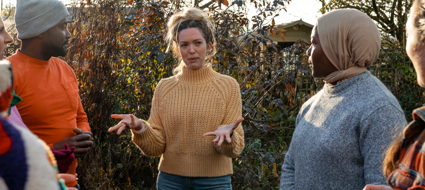
A brighter social care future: co-producing the evidence to make five key changes
This Evidence Review was co-produced by Research in Practice and Social Care Future, and brought together groups of people, with different lived experiences of social care, to talk about five key changes needed in social care in order to unlock an equal life.

Social work with older people: Frontline Briefing (2024)
This resource uses insights and evidence from a recent research project focused on Social Work with Older People. It sets out the specialist skills and knowledge practitioners bring to their work with older people, the impact they have on the people they work with, and the factors that enable effective practice.
Family and Group Conferencing for Adults
Resources supporting adult family group conferencing, developing services and guidance for professionals delivering services.